I’m not going to lie, this is basically a slop post — a quick, low effort thing just to put out some content. But at least it’s short. This is not to be confused with a slop bowl post, which actually took a long time to write.
On Monday, I wrote about how tightening liquidity hurts the riskiest assets first and most.
Thanks for reading All In The Reflexes! Subscribe for free to receive new posts and support my work.
Some crypto guys also wrote, in an extremely long X.com post, about liquidity driving crypto. I’ll link to the post (just click on the image), but it’s too long to include the whole thing.
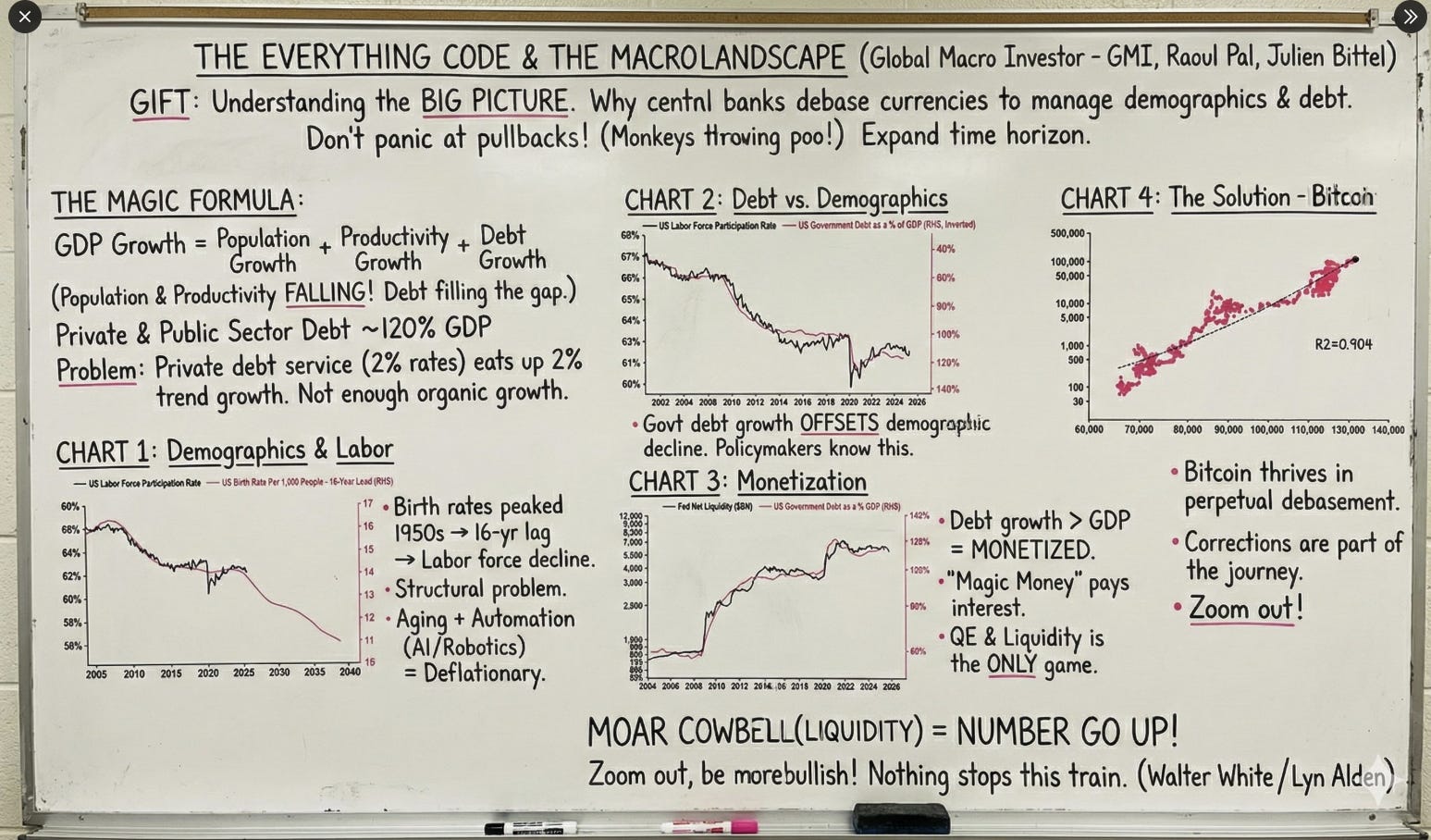
Luckily, someone in the comments used Google’s new AI to turn it into a single image.
The argument is basically there is a massive, constant, deflationary pressure that’s caused by the growing stock of global debt. The only way to deal with this deflationary pressure is to create more debt, and the only way to deal with this debt is to print money to monetize the debt. This printed money is, by definition, liquidity, and this liquidity goes into assets. They take the argument further to imply that the asset that benefits the most is bitcoin because bitcoin is the debasement-proof currency of the coming new monetary system, but I think bitcoin probably benefits because it’s farther out on that risk curve I drew on Monday.
The interesting thing is that, based on their formulation, if there were to be big productivity growth, there would be big GDP growth without an accompanying increase in debt. If you play this through their system, there would not need to be an increase in liquidity stemming from an increase in monetization of that debt, which, presumably, would be bad for bitcoin.
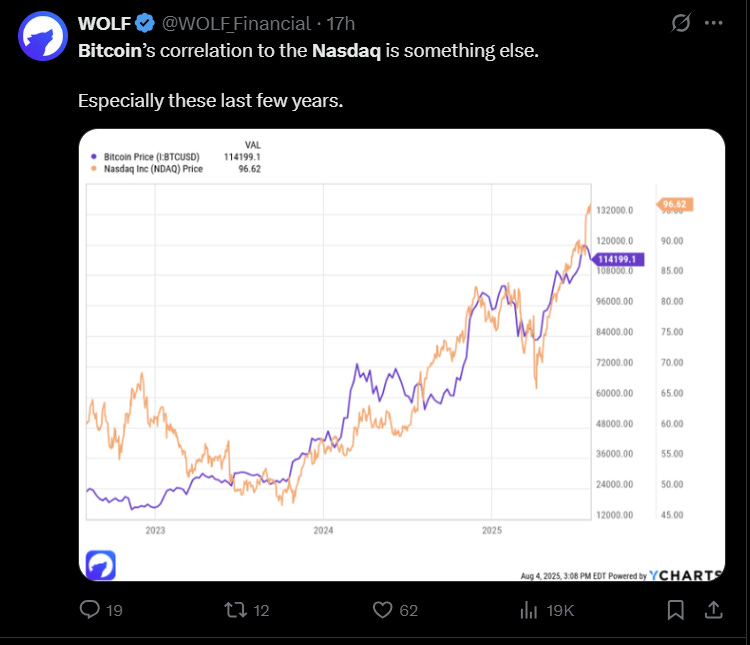
Enter private market assets. Crypto might be that highly volatile, highly correlated asset.
But in this scenario, if the big productivity boost is coming from AI, those two assets would probably diverge.
I think I’m going to leave it at liquidity flows into risky assets and makes them go up; the grand theories of Bitcoin sound pretty good, but might overstate their case a little.
Disclaimer: The information provided on this blog is for informational purposes only and should not be considered investment, financial, or other professional advice. Nothing on this site constitutes a recommendation or solicitation to buy or sell any securities. You should consult with a qualified financial advisor before making any investment decisions. Investing involves risks, including loss of principal.
Thanks for reading All In The Reflexes! Subscribe for free to receive new posts and support my work.